Weighted Evolution
A quieter message. A stronger reason to listen.
Creative & Content
Media Planning & Buying

A quieter message. A stronger reason to listen.
Weighted Evolution had a product built around rest, but its marketing needed a clearer focus. SnuggleMud developed “Sleep Soundly Again,” a campaign that brought its weighted blankets into a more recognizable human story. Unified messaging and digital creative gave the brand a foundation for awareness and subsequent paid-media activity.
Challenge
People looking for rest were encountering a crowded market of sleep and wellness products. Weighted Evolution needed a clearer way to introduce its weighted blankets within that environment.
Fragmented messaging made it harder for the brand to express a consistent point of view or give new audiences a reason to engage. The challenge was to simplify the invitation, with a creative idea that could hold attention and carry across the wider marketing program.
Approach
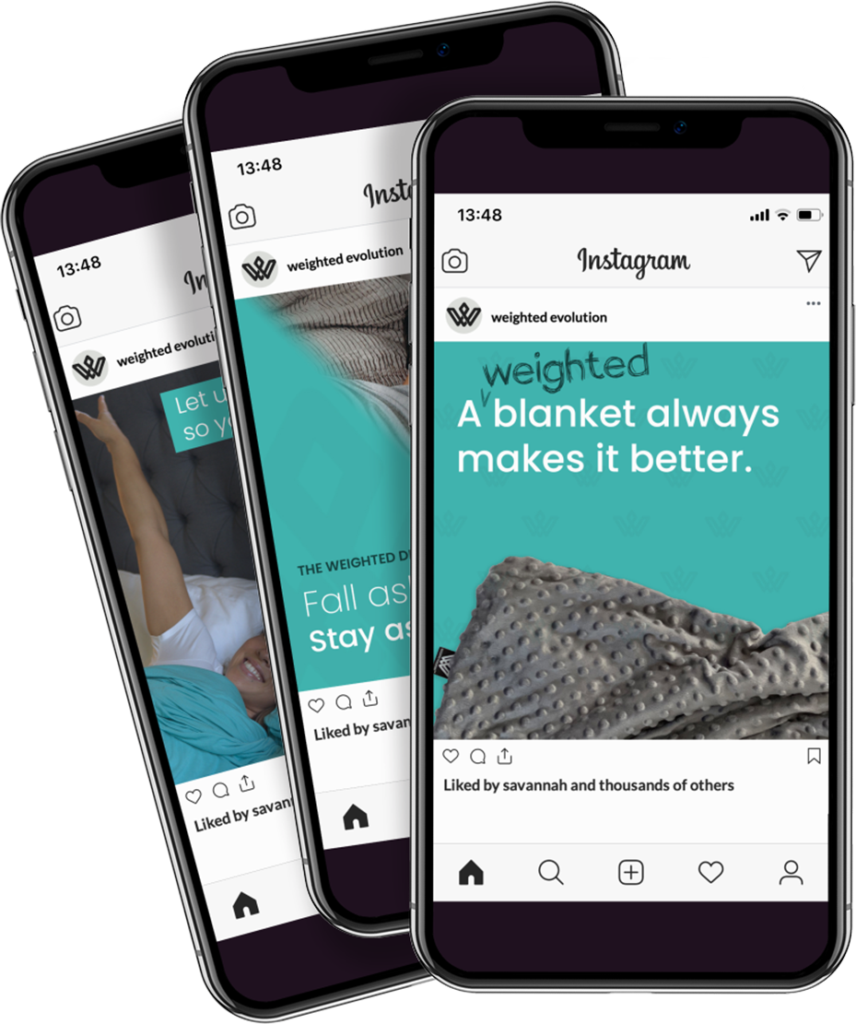
SnuggleMud developed “Sleep Soundly Again” as the organizing idea for the campaign, focusing the message on the tired, overworked audience the brand wanted to reach. Digital creative translated that idea into a consistent introduction across channels. The campaign was structured to support awareness first, with a path into retargeting and paid conversion activity. Rather than ask each asset to establish a different proposition, the work gave the brand one recognizable message to build on.
Outcome
Weighted Evolution emerged with a clearer voice and a campaign its marketing could grow around. The work brought consistency to how the brand introduced itself, making the product’s appeal easier to communicate across digital creative. It also established a foundation for subsequent paid-media activity, with awareness and conversion considered together from the outset. The result was a more focused expression of the brand, built to make its next conversation with a customer more coherent.
The Work
“Sleep Soundly Again”
A unifying campaign idea, developed as the organizing concept for the whole marketing program.
The idea focused the message on the tired, overworked audience the brand wanted to reach.
Clearer Brand Messaging
A consistent expression of the product’s appeal, replacing fragmented messaging with one point of view.
That consistency made it easier for new audiences to understand what the brand offered and why it mattered.
Digital Campaign Creative
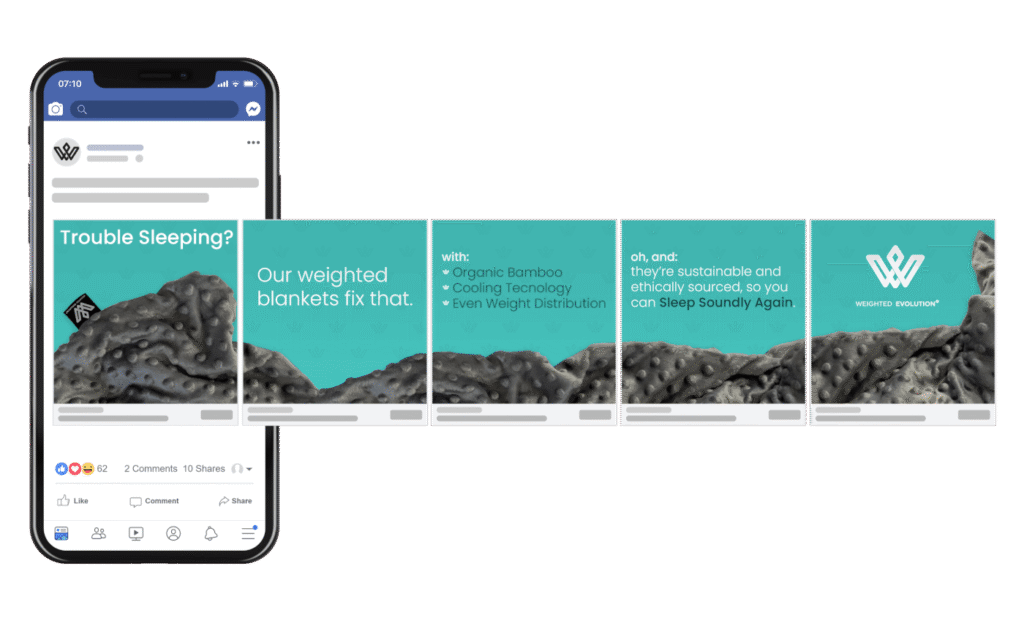
Assets designed to introduce the brand to new audiences, translating the campaign idea into a consistent presence across channels.
Rather than ask each asset to establish a different proposition, the creative gave the brand one recognizable message to build on.
A Connected Campaign Structure
Awareness creative designed to lead into retargeting and conversion activity, structured to support awareness first.
That structure established a foundation for subsequent paid-media activity, with awareness and conversion considered together from the outset.