Fremont Street Experience
An icon of downtown. A reason to make the trip.
Conversion & Marketing Technology
Measurement & Attribution
Media Planning & Buying
35.8%
Session-to-Purchase Increase
556
Audio-Assisted Conversions, 41 Days
$78,919.25
Attributed Value, 41 Days
$141.94
Avg. Value per Conversion
2.95
Blended ROAS
An icon of downtown. A reason to make the trip.
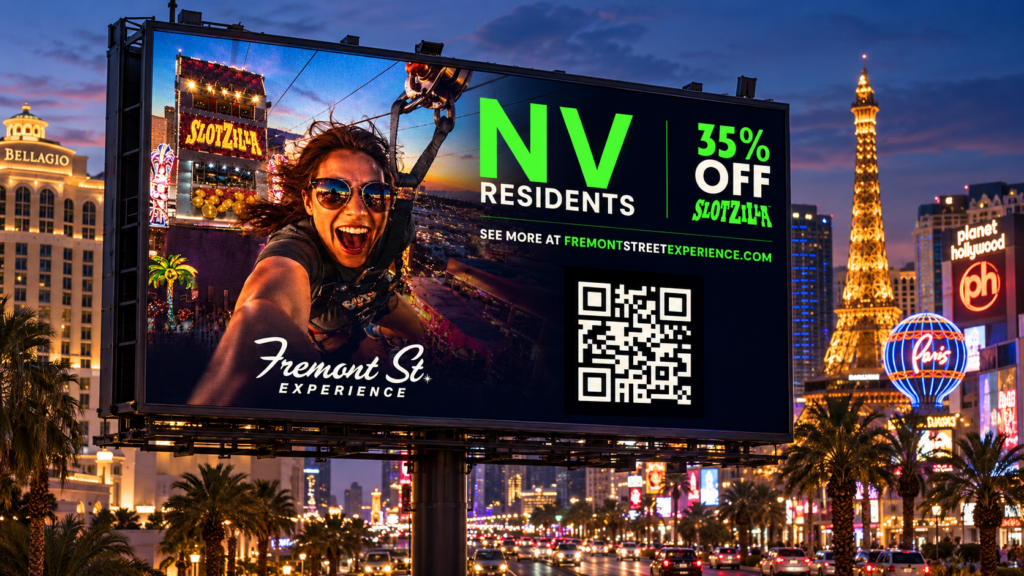
Fremont Street Experience brings Las Vegas spectacle to downtown. SnuggleMud provides strategic direction and measurement across a program connecting audio, digital out-of-home and the path to purchase. Over a 41-day reporting period, podcast and streaming audio recorded 556 assisted conversions with $78,919.25 in attributed value, making their contribution visible.
Challenge
In Las Vegas, being memorable and making the itinerary are different achievements. Fremont Street Experience needed to give visitors a reason to head downtown, then understand how that interest connected to purchases.
With audio, out-of-home and digital channels contributing at different moments, isolated reports could tell only part of the story. The challenge was to connect destination marketing with the commercial picture while respecting the different ways people discover, visit and buy.
Approach
SnuggleMud brought strategic direction and a shared measurement perspective to the program, shaping audio script standards and examining how podcast, streaming audio and digital out-of-home supported the visitor journey. The team reconciled media attribution with website activity and ticketing data, distinguishing exposure, assisted conversions, orders and riders. That work made it possible to evaluate each channel’s contribution in context and identify where creative, audience strategy and purchase intent could connect more effectively.
Outcome
Audio’s contribution became visible in the purchase journey, giving Fremont Street Experience evidence beyond delivery alone. Podcast placements accounted for most of the attributed value, while the Los Angeles market contributed assisted conversions alongside the program’s Las Vegas focus. Those findings gave the team a clearer basis for planning around both visitors already in market and people considering the trip. For an iconic destination, the work connected the invitation with measurable customer action.
35.8%
Session-to-Purchase Increase
556
Audio-Assisted Conversions, 41 Days
+28%
New Users
+55%
CTR
+340%
Clicks
3X
ROAS