

Social Media Management
Social media that builds an audience you do not have to rent.
Strategy, content, publishing and community management for owned channels. Run with the same discipline as a paid channel, because it is competing for the same attention and the same budget.
Where this sits in the system
Social Media Management
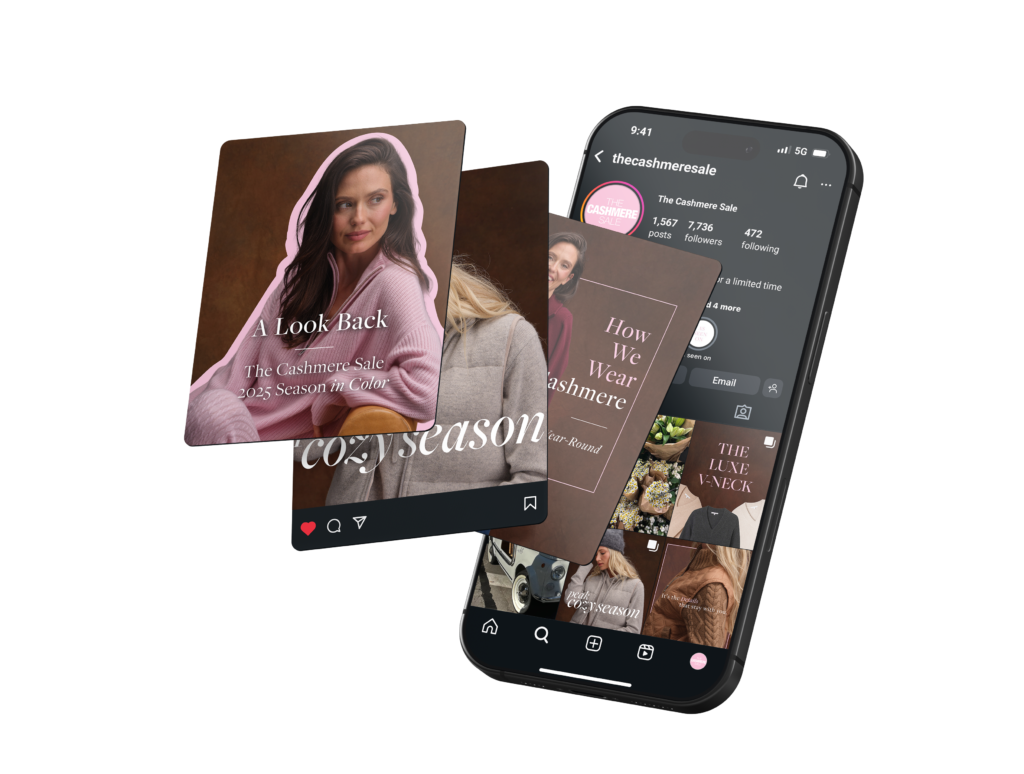
Owned social sits in the create job alongside media and creative. It is the one demand source with no media cost and no auction, which is exactly why it gets under-resourced and then judged by the wrong metrics.
The specific failure: organic social managed as a publishing obligation produces activity nobody can connect to revenue, and it becomes the first line cut. Managed as a demand channel, it lowers the cost of every paid channel running against the same audience.
The problem
It is usually the least senior work in the building.
Delegated to the most junior person available, given a content calendar, and measured on followers and engagement rate. Neither number appears in a P&L.
Once a calendar is the deliverable, filling it becomes the job. The person doing it is rarely given access to the media data, the search data or the revenue data that would tell them what to make, so posts get made to occupy slots rather than to do anything. Followers and engagement become the goal because they are the only numbers within reach. Then a quarter tightens, nobody can connect any of it to revenue, and it is the first line cut.
The uncomfortable part, stated plainly: if followers and engagement are the only outcomes available, this is not worth buying from us.
Someone will keep your grid full for less than we charge, and if that is the requirement we will tell you so rather than sell you a strategy deck. What makes this worth buying is what it can do next to everything else: test hooks before they become paid creative, hold the branded search that media upstream is generating, and give a category a reason to know who you are before the ad arrives. Those effects show up in what paid costs.
What we do
What the work actually includes.
- • Channel strategy: which platforms, at what cadence, for what purpose
- • Content strategy built from search and audience data rather than a calendar template
- • Content production and publishing
- • Community management and response, with escalation rules
- • Creator and partnership coordination
- • Social listening and category monitoring
- • Organic testing that feeds the paid creative pipeline
How we run it
Run
The same weekly routine as every other channel.
Owned social is reviewed in the same weekly cycle as paid, against the same objectives. Organic performance signals feed the paid creative brief, and paid results feed the organic content plan. That loop is the entire reason to buy both from one team.
Measure
Business outcomes first, platform metrics second.
Branded search volume, direct traffic and assisted conversions. Audience growth in cohorts that match the paid targeting. Content-level signals that predicted a paid winner. Followers and engagement are reported because you will want them, and they are not the case for the work.
Scale
Compounding is the entire point.
Paid media stops the day you stop paying. An owned audience does not. The value of this work is almost entirely in year two and beyond, which is also why it is the easiest thing to cancel in month four and the most expensive thing to restart in month twelve.

How this works
-
Readiness is engineered. So is the next stage of growth.

Public Safety & Industrial Equipment

Connected Capabilities
Paid Social
The same audience, reached with media spend instead of reach.
Creative & Content
Content at the volume owned channels require.
Measurement & Attribution
Organic contribution is invisible without an attribution model that looks for it.
FAQ
Questions we get asked
What does a social media management agency actually do?
The work is channel strategy, content production, publishing, community management and response, creator coordination, and listening to what is being said about the category. That much is standard. What separates one from another is where the content decisions come from: a template calendar, or the search data, audience data and paid creative results that show what people actually respond to. The list of tasks is the same either way. The inputs are what change the outcome.
How is organic social measured if not by followers?
By what it changes elsewhere. Branded search volume, direct and organic sessions that follow social activity, the share of paid creative that started as an organic test, response times and resolution on inbound messages, and assisted conversions where the tracking supports it. Some of these move for reasons other than social, and we say so rather than claiming the whole change. The point is that every one of them connects to something the business already counts.
Should paid social and organic social be handled by the same team?
Under one strategy, yes. Under one calendar, no. Organic should feed paid, testing hooks and formats cheaply before there is spend behind them, and that only happens if the same people see both. The failure is the reverse direction, where paid social gets handed to whoever runs the posting schedule and ends up managed as content rather than as media, with the budget decisions made outside the media plan.
Tell us what social is supposed to do for the business.
If the answer is only to be active, we will say so.